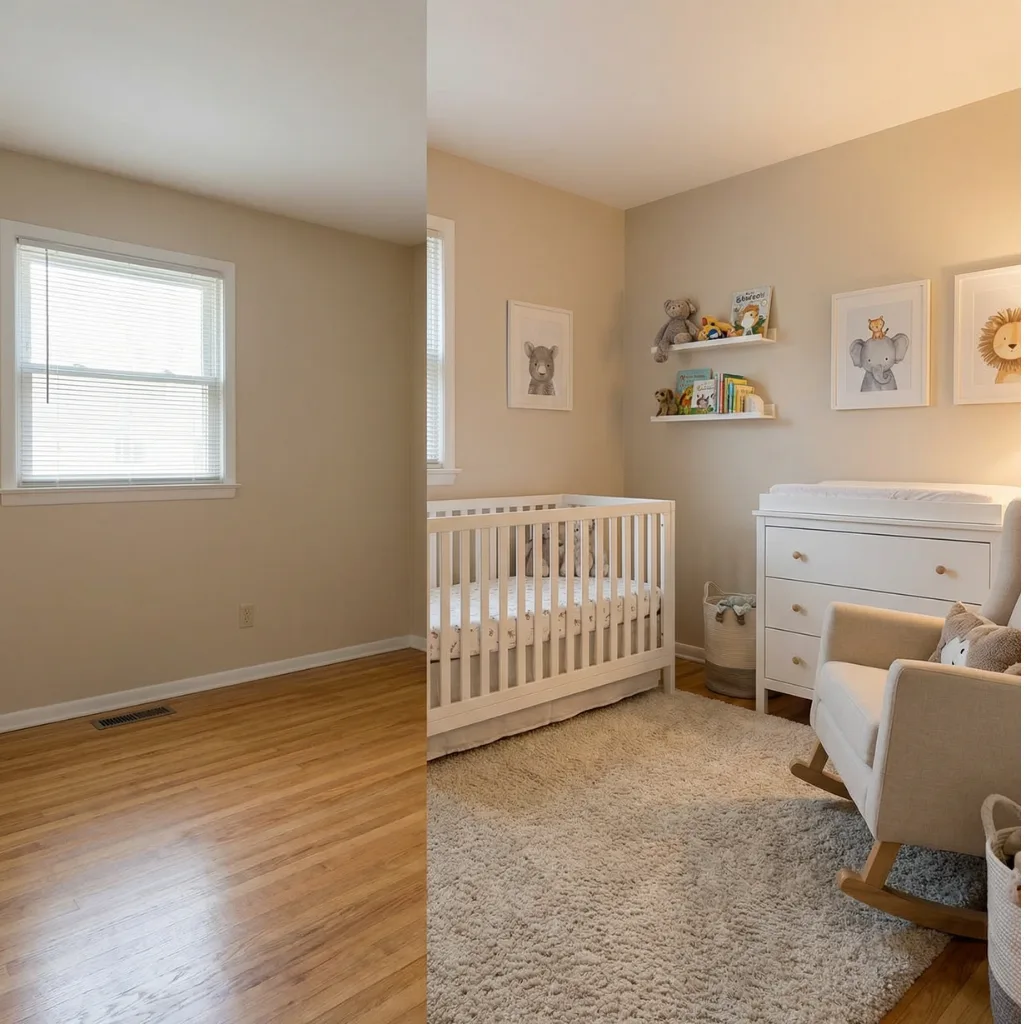
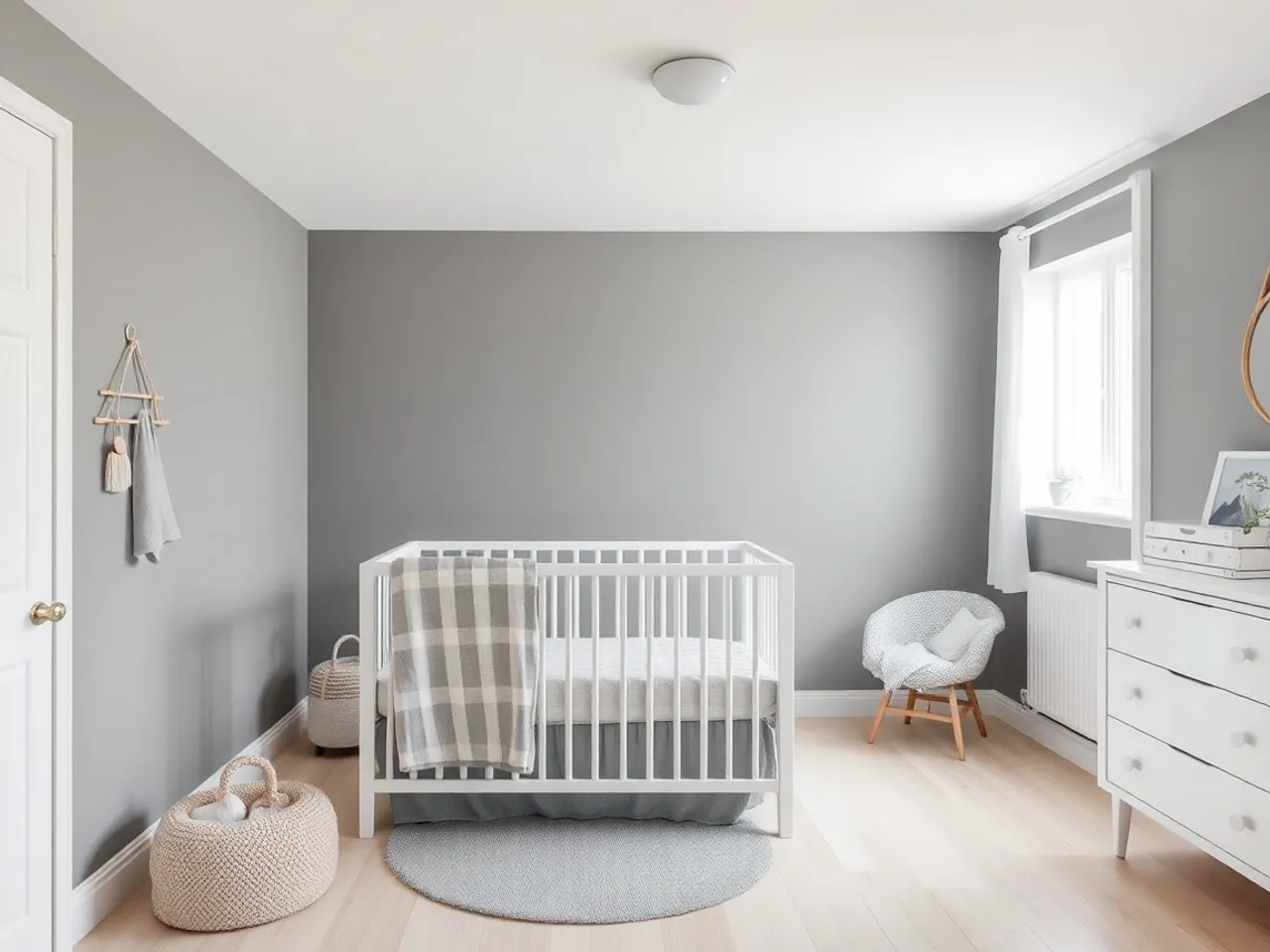
Two things went wrong, and neither was the paint
The bulbs changed. Most popular greys carry a blue or violet base. Under the halogen and incandescent light they were chosen against, that base was warmed into neutrality. Under the 2700K to 3000K LEDs almost everyone now has, it is not. The paint did not change. The room did.
Grey has no relationship to wood. Green agrees with wood, beige extends it, navy frames it. Grey sits next to it. A grey nursery with an oak crib reads as two separate choices rather than one scheme, which is why so many of them feel unresolved.
Nothing here says you have to repaint. It says a grey room needs help that a green or beige room does not.
Fixing a cold grey nursery for about $200
Do these in order and stop when the room feels right. Most people stop at three.
| # | Change | Cost | Why it works |
|---|---|---|---|
| 1 | Every bulb to 2700K | $15 | The single biggest change. Do this before concluding anything about the paint. |
| 2 | Swap cool white bedding and curtains for cream | $60 | Cool white next to grey is what makes a room read clinical. |
| 3 | Add a jute or wool rug in a warm natural tone | $100 | Brings in both warmth and texture, which grey has none of. |
| 4 | Change chrome or nickel hardware to brass or matte black | $25 | Chrome doubles down on the cold. Brass reverses it. |
| 5 | Add one real wood element with visible grain | Varies | A stool, a shelf, a picture frame. It gives the grey something to relate to. |
| 6 | Repaint the trim in a warm white | $40 | Only if 1 to 5 were not enough. Cheaper and faster than repainting walls. |
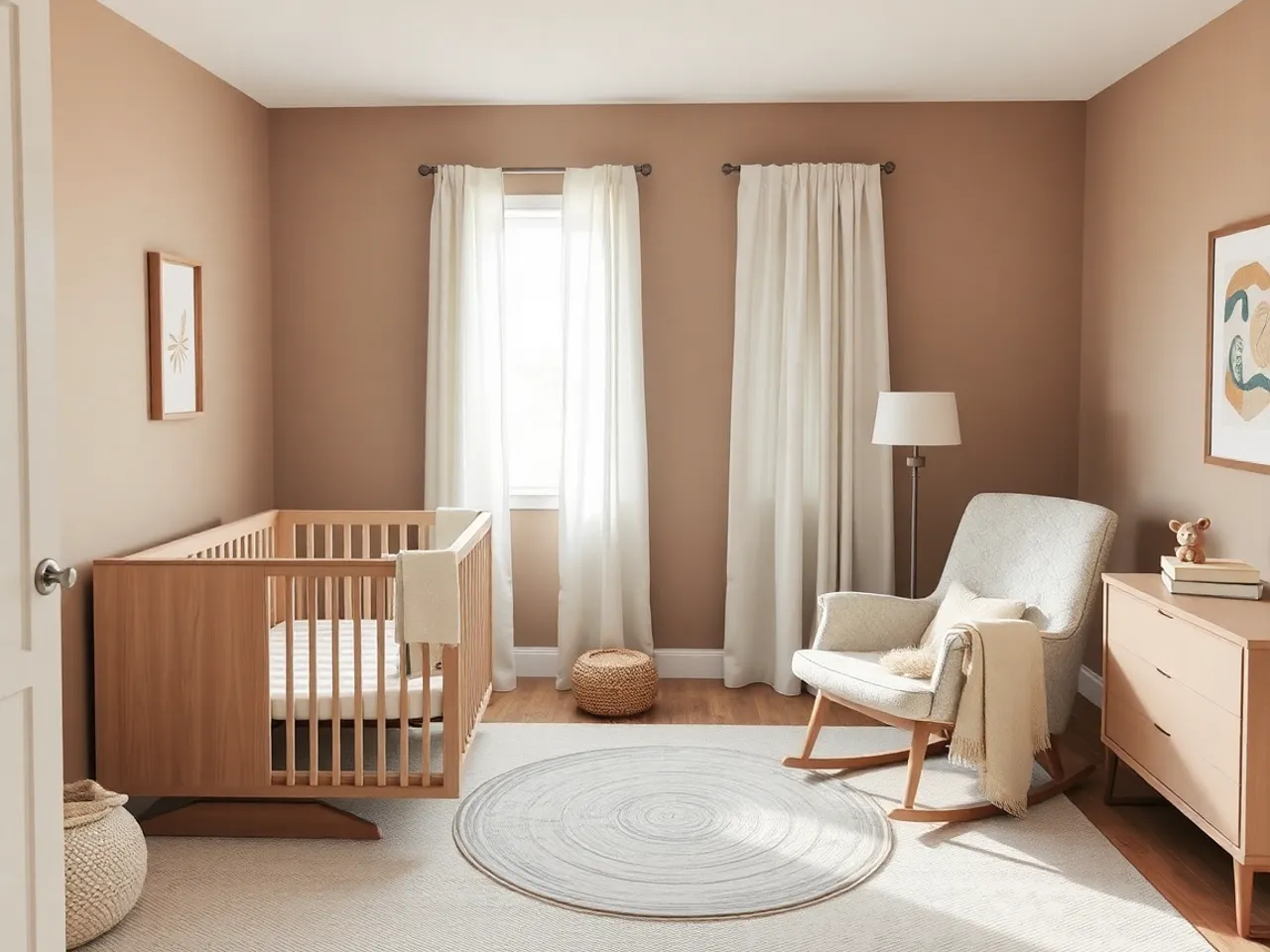
The greys that still work
Warm grey and greige
Grey with somewhere to stand
Enough brown in the base that it sits next to wood. Sherwin-Williams Agreeable Gray, Benjamin Moore Edgecomb Gray and Pale Oak.
- Wall #E9E2D8
- Warm grey #D3C9BB
- Deeper #B3A695
- Trim #F8F5EF
- Contrast #35322C
Green-based grey
Reads calm rather than cold
The base cancels the violet that causes most of the trouble. Effectively the doorway into sage without committing to green.
- Wall #E5E8E2
- Green grey #C2C8BC
- Deeper #9AA294
- Trim #F7F7F2
- Contrast #3A4038
Charcoal, used deliberately
Not a pale grey turned up
A dark room on purpose. Easier to nap in, needs two lamps, and it makes oak furniture look considerably more expensive than it is.
- Trim #F4F1EA
- Charcoal #3B3E3D
- Oak #B0895E
- Cream #E0D8C8
- Brass #C9A227
The greys to leave alone
- Blue-based pale greys. The ones that photograph beautifully in a magazine shot with south light and go arctic in a real nursery.
- Violet-based greys. Fine until the bulbs go warm, then obvious and impossible to unsee.
- Grey with a bright white trim. Not a paint problem, a pairing problem, and it is the most common one.
- Grey plus pink. The single most dated combination available in a nursery. Covered in the pink guide.
What replaced it
| If you liked grey because | Go to |
|---|---|
| It is quiet and low contrast | Greige. Same restraint, warm enough for wood. |
| It is not really a color | Sage. Reads as a neutral and holds up under warm bulbs. |
| It is cool and calm | A green-based blue. Cool without going cold. |
| It is dark and moody | Charcoal above, or navy. Both work better with oak than grey does. |
| It is gender neutral | Any of six palettes, none of which are grey. |
Questions people actually ask
Is a grey nursery outdated? +
Why does my grey look purple? +
Can I warm up a grey nursery without repainting? +
What should I use instead of grey? +
Keep going
All nursery paint colors
Undertones, sheen and how to test before buying.
Beige nursery
The direct replacement, and the texture rule it needs.
Sage green nursery
The color that took grey's place, and why.
Blue nursery
Cool without cold, if you get the undertone right.
Baby boy nursery ideas
Five palettes, none of them grey.
Gender neutral nursery
Neutral without defaulting to grey.