Organise by size, not by category
This is the single decision the rest of the room depends on. Every container holds one size. When the child grows out of that size, the container leaves the room whole, and the next one comes down from the shelf.
| Where | Holds | Why there |
|---|---|---|
| Top two drawers | Current size, in daily use | Reachable while holding a baby with one arm. |
| Hanging rail, lower rod | Current size, things that crease | Visible, and it is what visiting family will find. |
| Bottom drawer | Next size up, opened once a month | Low, awkward, rarely needed. Correct place for it. |
| Closet shelf or under-crib bins | Future sizes, labelled by size and season | Out of the way. You are not opening these weekly. |
| One bin by the door | Outgrown, on its way out | The critical one. Without it, outgrown clothes stay in the drawer for months. |
Add the season to the label, not just the size. A 6 to 9 month snowsuit gifted in April is the classic case of something that never gets worn because it was filed by size alone.
The closet is the extra room
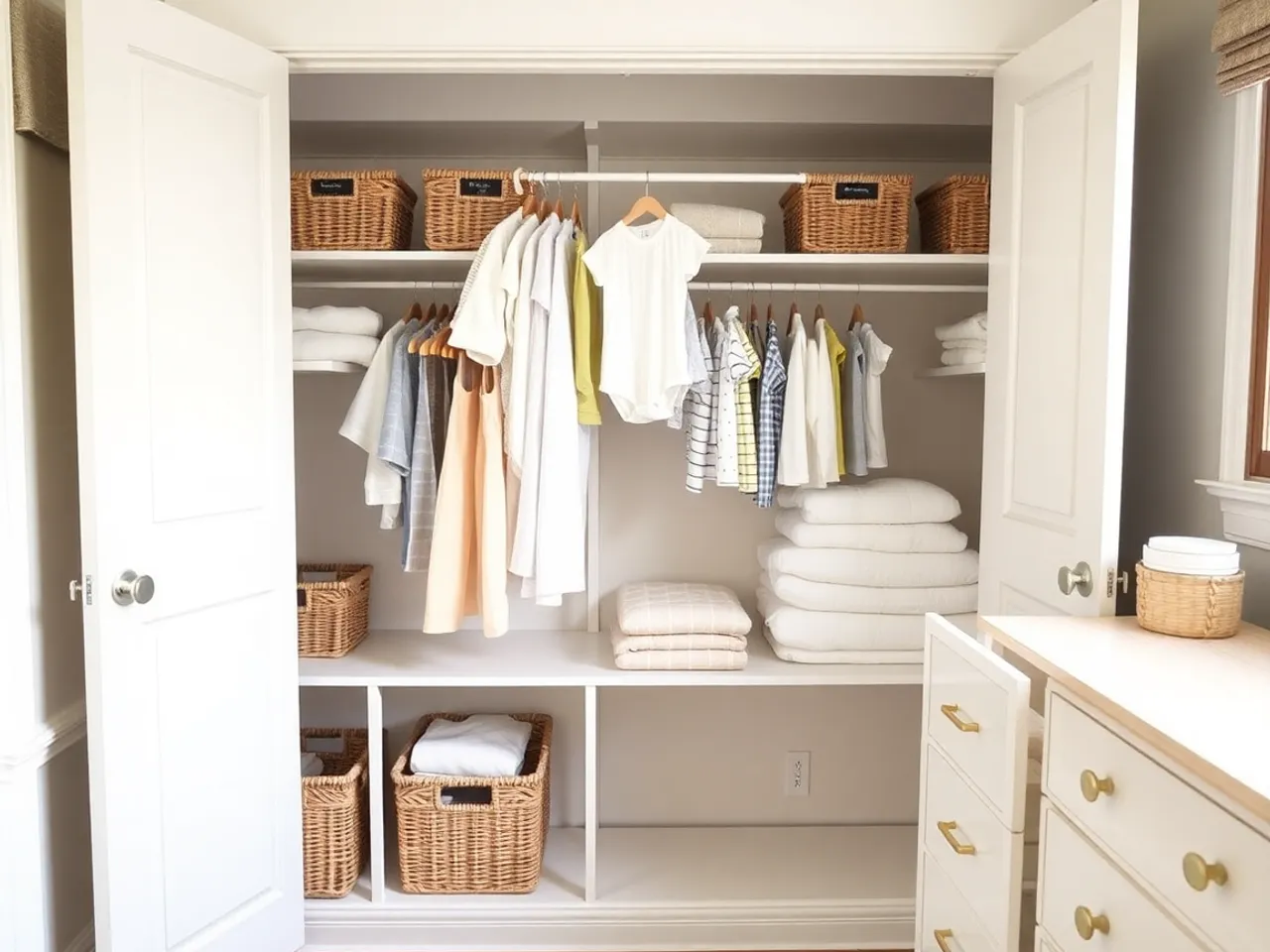
A standard closet with one rod at adult height wastes about two thirds of its volume, because baby clothes are 12 to 20 inches long. Four changes turn it into the most useful storage in the house.
- Add a second rod at about 30 inches from the floor. Two levels of hanging, and the lower one becomes reachable by a two year old choosing their own clothes.
- Put a dresser or drawer unit under the lower rod, or beside it. In a small nursery this is where the dresser should live, which frees a whole wall.
- Baskets on the shelf, labelled by size. Open baskets, not lidded boxes. A lid is a decision you will not make at 7am.
- Take the doors off if they are bifold. You gain the swing, the closet becomes open shelving, and a curtain on a tension rod hides it in ten minutes.
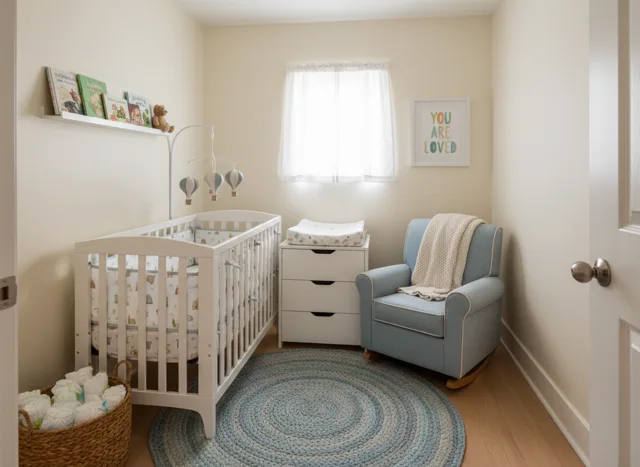
The full set of small-room swaps is in the small nursery guide.
Drawer zoning
Baby clothes are small enough to disappear in an undivided drawer. Divide every drawer, file items vertically so you can see all of them at once, and give each drawer one job.
| Drawer | Contents |
|---|---|
| 1 (top) | Bodysuits and sleepsuits in the current size. The drawer you open at 3am. |
| 2 | Trousers, tops, cardigans. Current size. |
| 3 | Sleep sacks, muslins, burp cloths, hats and socks in small dividers. |
| 4 | Next size up, unopened. |
| 5 or 6 | Bedding: spare crib sheets, mattress protectors, changing pad covers. |
Cardboard boxes cut down to drawer height work as well as bought dividers and cost nothing. The point is the compartments, not what they are made of.
The arm's reach rule
You never take a hand off a baby on a changing pad. That single fact decides where everything at the changing station goes.
- Within reach, without turning: wipes, a stack of diapers, cream, one clean bodysuit, a muslin.
- Within reach, with a turn: the diaper bin, spare sheets, spare covers.
- Anywhere: everything else.
A small caddy on the dresser top, or a shallow wall shelf mounted just above the pad, holds the first group. Whatever holds it needs to be refilled on a schedule, not when it runs out. Once a week, top up the diapers and the wipes.
Nothing goes on the wall directly above the changing pad unless it is fixed and cannot fall. Picture ledges belong higher, above head height when you are standing at the dresser.
Two habits that do more than any product
- The outgoing bin. One basket by the door. Anything that no longer fits goes in it immediately, not later. Empty it when it is full.
- The Sunday five minutes. Refill the changing caddy, empty the outgoing bin, and put back anything that has migrated. It is the difference between a room that stays organised and one that gets reorganised every three months.
Questions people actually ask
How do I organize baby clothes? +
What do I do with clothes that are too big? +
How many drawers does a nursery need? +
Are closet organizers worth it? +
Keep going
Small nursery ideas
Where the closet does the heavy lifting.
Nursery checklist
The storage section, in list form.
Nursery layout planner
Where the dresser goes, and how much standing room it leaves.
Montessori nursery
Storage the child can reach and put back.
All nursery ideas
Storage low, decor high, and the rest of the rules.
Boho nursery
Where the storage baskets are also the decoration.