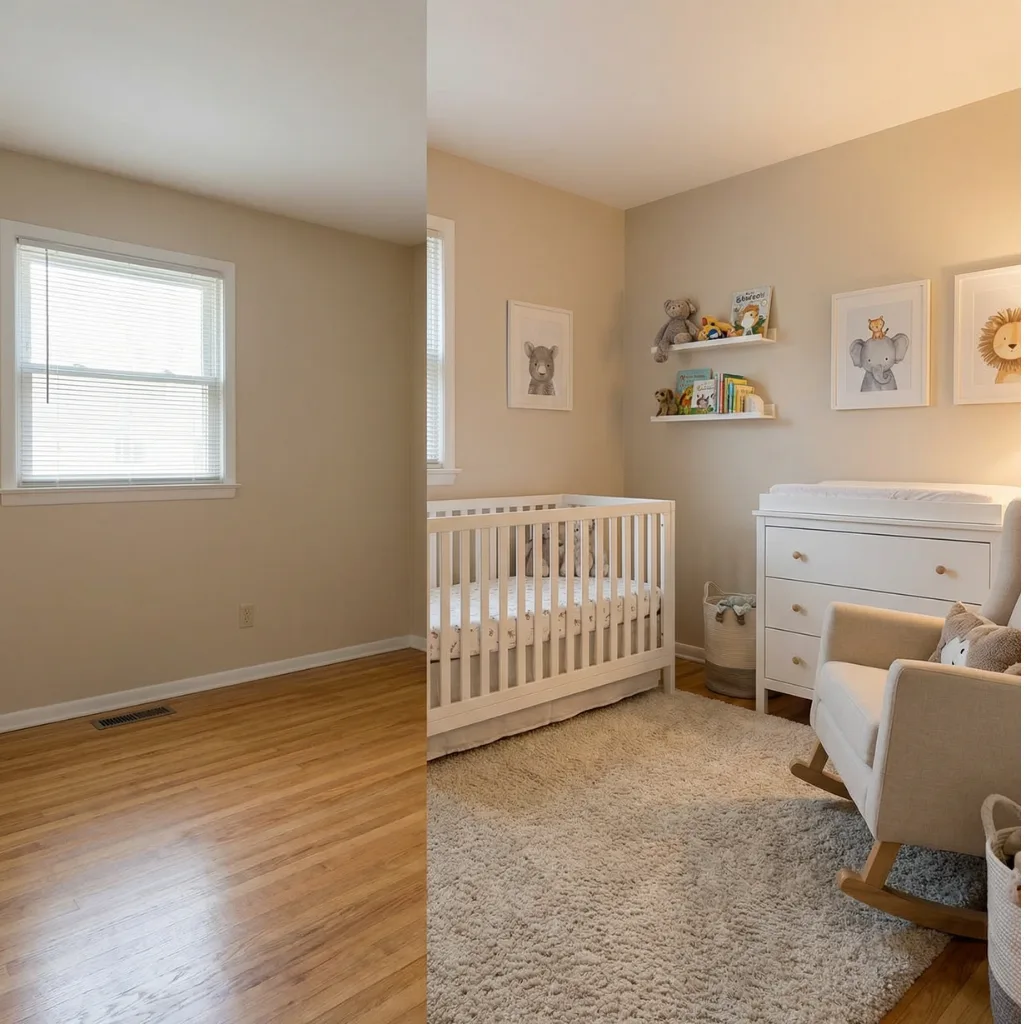
Three things decide the room before you do
Every nursery layout is really a negotiation with four fixed objects: the door swing, the window, the closet, and whatever is on the walls that you cannot cover (radiator, vent, panel). Decide where the crib goes against those first. Theme takes an afternoon. A crib in the wrong place is two years of walking around it.
- The door. It needs to open fully and you need to reach the crib without a detour. If the door swings into the only wall long enough for a crib, get the hinges reversed. It is a 20 minute job.
- The window. Cribs go on an interior wall. Not because of the view, but because of blind cords, draft, and morning light hitting a face at 5:40am. If the only crib wall is the window wall, budget for blackout blinds with no loose cord.
- The outlet you will use most. The sound machine, the monitor and the lamp all live near the crib. If there is no outlet on that wall, you are running a cable across a floor a toddler will walk on.
Get those three settled and you can test any theme on top without redoing the plan. The layout planner does the geometry part for you if you would rather type your room size than draw it.
Nine ideas, with the catch attached
1. Dresser as changing table, always
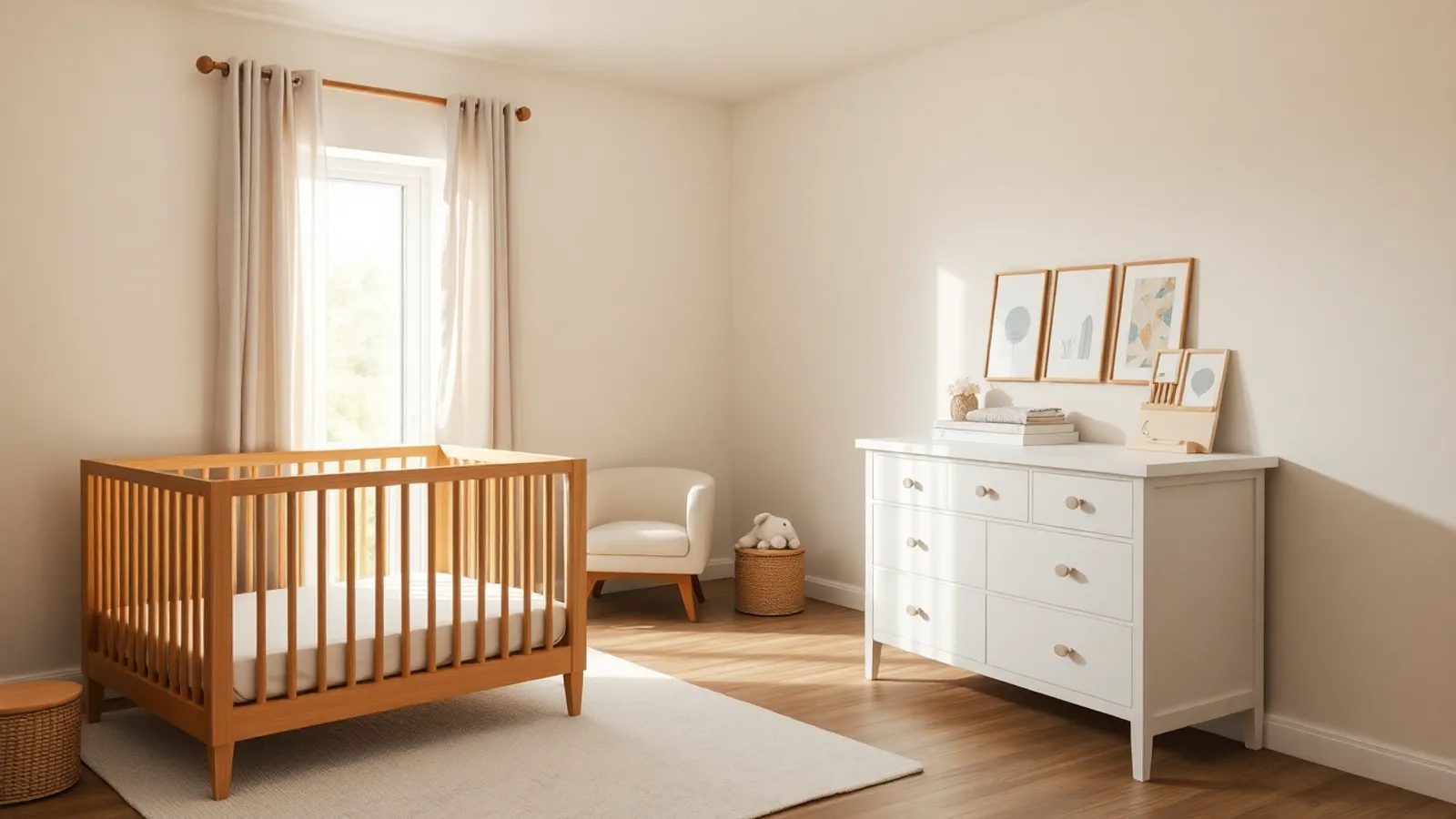
A dedicated changing table is useful for about 18 months and then it is furniture nobody wants. A wide, low dresser with a contoured changing pad strapped to the top does the same job and stays in the room until they leave for college. Look for a dresser under 36 inches tall and at least 20 inches deep. Anything shallower and the pad hangs off the front.
2. Put the reading chair where the light is, not where it looks best
Glider in the corner next to the window is the photograph. Glider where you can reach a lamp, a side table and a burp cloth without standing up is the reality. If you only have space for the chair or the side table, keep the table. You can feed in a hard chair. You cannot hold a bottle, a phone and a glass of water in two hands.
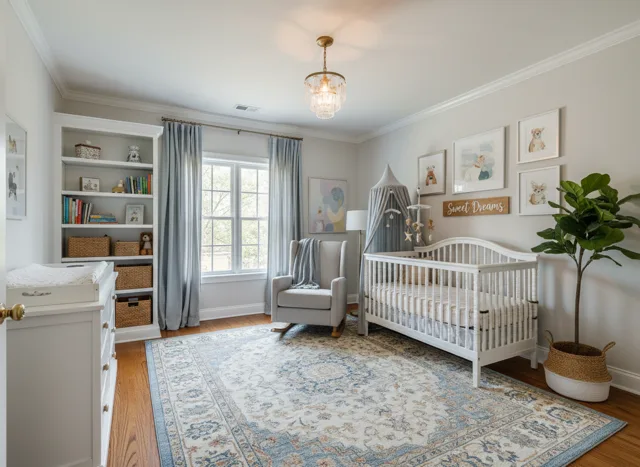
3. Paint the ceiling, skip the accent wall
Accent walls date the room to the year you painted them. A very slightly tinted ceiling (the wall color at 25 percent) does the same softening job, looks deliberate, and is the surface a baby on their back actually spends the most time looking at. It also costs one extra quart.
4. Two light sources minimum, and one of them dims
Overhead light for changes at 2pm, a dim lamp for changes at 2am. If you can only add one thing to the electrics, make it a dimmer on the ceiling fixture. Plug-in lamps are the cheap fix and they are also the thing a toddler pulls down first, so wall sconces near the chair are worth the installation if you are already having someone in.
5. Storage low, decor high
Everything you need at 3am should be between knee and shoulder height. Everything decorative goes above that line. This sounds obvious and almost nobody does it, because the shelves look better at eye level in a photo. Wall shelves above the dresser are where the books that never get read live.
6. Buy the rug bigger than feels right
A 5 by 7 in the middle of a 10 by 10 room reads like a bath mat. Go 8 by 10 and let the furniture legs sit on it. Low pile, washable, and dark enough to hide the milk. Wool looks best and is the worst possible choice for a room that will be vomited on repeatedly.
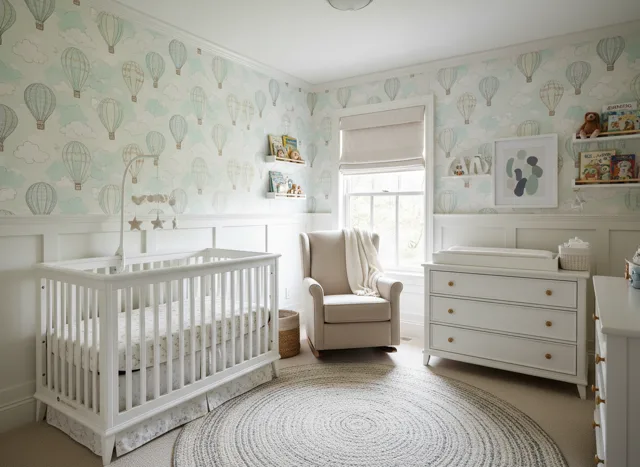
7. Wallpaper one wall, not the room, and put it behind the crib
If you want a pattern, the wall behind the crib is the right one: it is the wall you see from the door, it is mostly hidden by the crib at floor level, and peel-and-stick on a single wall is a two hour job you can undo. Full-room pattern in a small nursery makes it feel like a box.
8. Blackout, then a sound machine, then everything else
The two items with the clearest effect on how the room works are blackout blinds and a white noise machine. Together they cost less than a nice lamp. Do those before the gallery wall.
9. Leave one empty wall
You will be given things. A bookshelf, a play mat, a giant plush animal from an aunt. A room with every wall committed has nowhere to put the next phase, and the next phase arrives at nine months when the baby starts moving.
What fits, by room size
Measured in feet, assuming a standard 28 by 52 inch crib and a 36 inch walking path on at least one side.
| Room | Fits comfortably | What gets cut |
|---|---|---|
| 7x8 or smaller | Crib, narrow dresser | The chair. Feed in your bedroom, use the nursery for sleep and changes. |
| 8x10 | Crib, dresser, armless glider | Bookshelf, toy storage, anything freestanding. Go vertical or into the closet. |
| 10x10 | Crib, dresser, glider, small bookcase | Nothing important. This is the size everything is designed for. |
| 10x12 and up | All of the above plus a play area or a twin bed | Nothing. Consider leaving floor space open rather than filling it. |
If you are at the tight end of that table, the small nursery guide goes through the specific swaps that buy back floor space.
Where the money actually goes
| Item | Typical spend | Worth paying up for? |
|---|---|---|
| Crib | $180 to $500 | No. Every crib sold in the US meets the same federal safety standard. Buy the one that looks right and is not a drop-side antique. |
| Mattress | $90 to $250 | Somewhat. You want firm and a snug fit, both of which the cheap ones do. Dual-sided is a genuine convenience. |
| Dresser | $250 to $700 | Yes. It stays for 15 years and drawer glides are what fail. Anti-tip anchoring is not optional. |
| Glider | $300 to $900 | Yes if you are feeding at night. Sit in it before you buy. Arm height decides whether it works. |
| Blackout blinds | $40 to $150 | Yes. Cheapest change with the biggest effect. |
| Paint | $60 to $120 | Buy the better paint, it is two coats instead of three. Low-VOC and let the room air out for 48 hours. |
| Rug, decor, art | $150 to $600 | No. This is the layer to do slowly and secondhand. |
Four mistakes that cost the most to undo
- Committing the room to a theme with paint and paper. Themes belong in textiles, art and small objects, which cost $40 to swap. A jungle mural is a weekend and a repaint. See how the ten themes compare on that specifically.
- Picking a paint color from a phone screen. Nursery light is usually one window and a lot of white trim, which pushes almost every neutral toward its undertone. Test on the wall. The paint guide has the shortlist that survives that.
- Buying furniture that only fits one arrangement. A convertible crib with an attached changing table locks the layout for two years. Separate pieces move.
- Filling the closet with clothes in one size. Rotate by size, not by category. Newborn clothes are worn for about six weeks and the 3 to 6 month bin is the one you actually open.
Questions people actually ask
What order should I buy things in? +
How much does a nursery cost? +
When should I start? +
Do I need a nursery at all in the first months? +
Keep going
Nursery layout planner
Enter the room size and get a to-scale plan with clearances checked.
Nursery checklist
The list, minus the 30 things registries add to hit a total.
Nursery themes compared
Ten themes, what each costs to walk back later.
Gender neutral nursery
Rooms built to work for the next baby too.
Small nursery ideas
8x10 and under, with the swaps that buy floor space.
Nursery paint colors
What holds up in one-window rooms, and what turns green.