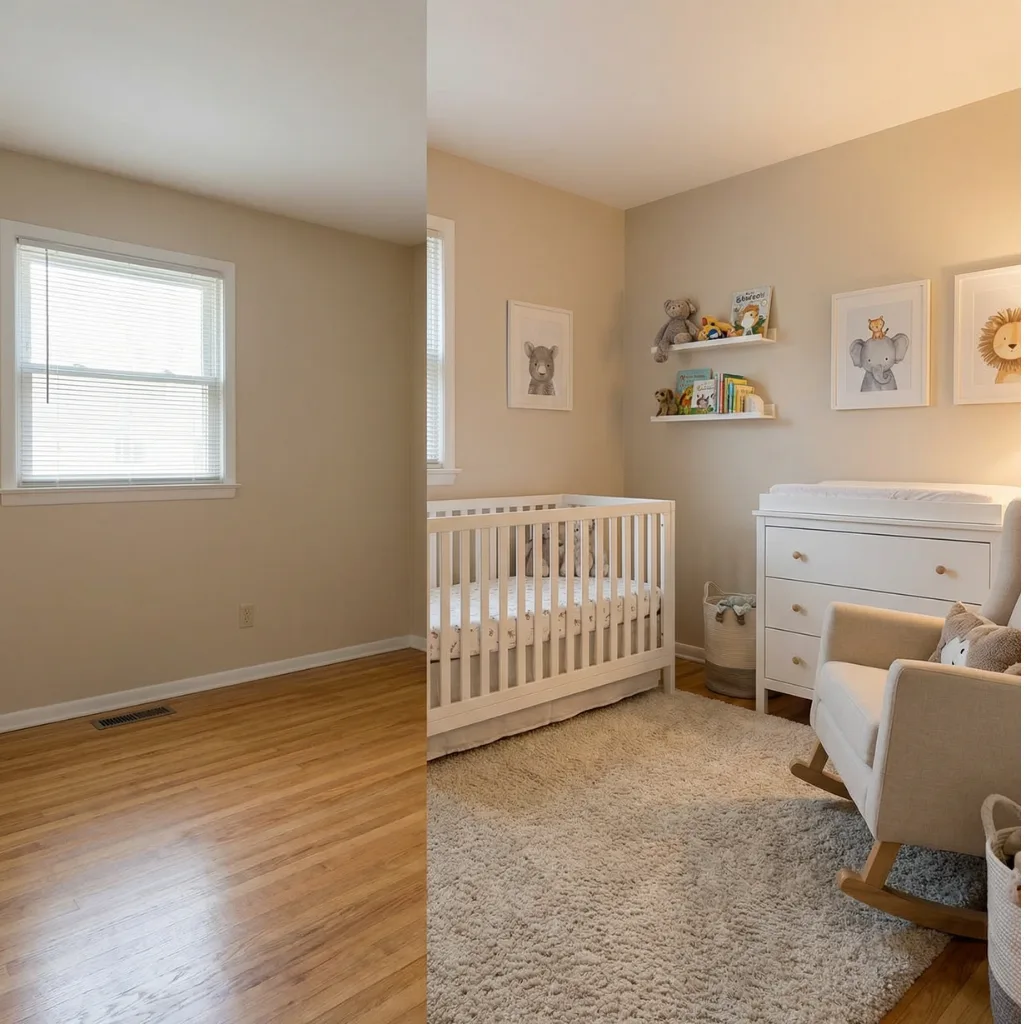
Which way the window faces decides most of it
A nursery is usually the smallest bedroom, which means one window and one aspect. That single fact changes every color in the room more than the paint brand does.
| Window faces | The light | Colors that work | Colors that fail |
|---|---|---|---|
| North | Cool, even, never direct | Warm whites, greige, clay, warm sage, deep colors used deliberately | Grey, pale blue, cool white. All go flat and slightly dirty. |
| South | Bright, warm, changes all day | Almost anything. Cooler colors get a chance here. | Very pale colors, which wash out to white by noon. |
| East | Warm early, dull from mid afternoon | Greens, warm neutrals, soft blues | Yellows, which go sour in the afternoon. |
| West | Flat until late, then strong gold | Greys with a warm base, greens, blues with a grey base | Pinks and peaches, which go orange at 6pm. |
The shortlist, by family
These are colors that show up repeatedly in nurseries because they behave predictably in small rooms. Names are given for orientation. Every brand has a near-equivalent, and your paint shop can match across brands.
Warm whites
The default that is hard to get wrong
Benjamin Moore White Dove, Swiss Coffee, Sherwin-Williams Alabaster. Warm enough to sit next to wood, light enough for a dark room.
- Warm white #F4F1E8
- Softer #EDE8DC
- Deeper #E4DDCE
- Trim #FBFAF6
- Contrast #2B2A26
The catch: a warm white needs a warm white trim. Warm white walls against builder-standard bright white trim is the single most common nursery paint mistake, and it makes the walls look dirty rather than warm.
Greige and warm neutrals
Grey without the cold
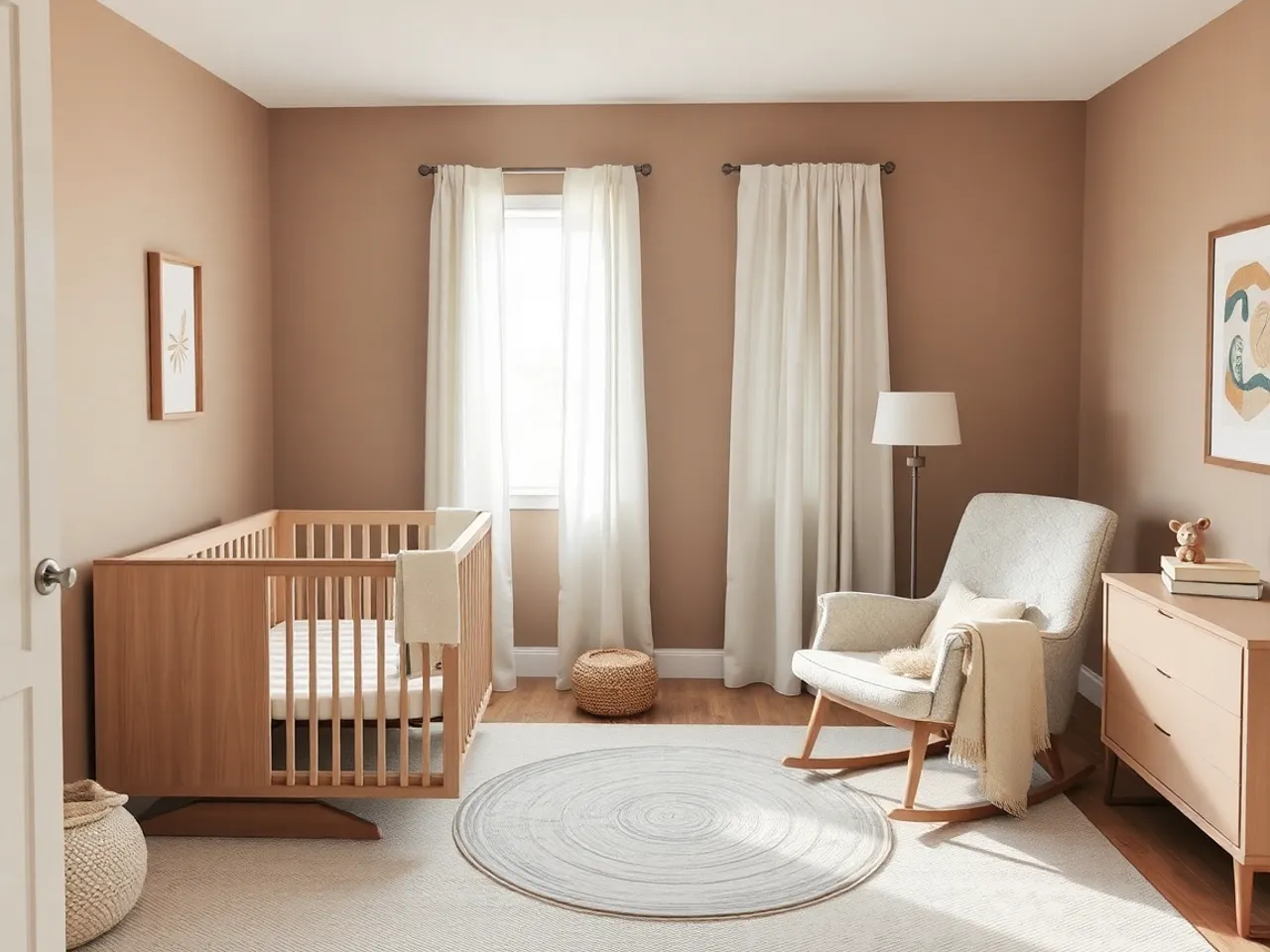
Sherwin-Williams Agreeable Gray and Accessible Beige, Benjamin Moore Edgecomb Gray and Pale Oak. These carry a room where you want the furniture and textiles to do the talking.
- Pale greige #EAE3D7
- Mid greige #DBD1C1
- Deeper #C7BBA8
- Trim #F7F4EE
- Contrast #38352F
Greens
The family that replaced grey
Sherwin-Williams Evergreen Fog and Sea Salt, Benjamin Moore October Mist and Quiet Moments. Green is forgiving because it holds its identity under warm bulbs.
- Palest #E9EDE5
- Soft sage #C4CFBB
- Mid sage #94A88C
- Deep #5F7361
- Forest #2F4A3A
More on picking between them in the sage green nursery guide, including which sage turns grey and which turns yellow.
Blues
The riskiest family, and worth it in the right room
Benjamin Moore Palladian Blue and Quiet Moments, Sherwin-Williams Rainwashed. All three lean green, which is what keeps them out of baby-blue territory.
- Palest #E9EFEF
- Soft #C3D2D3
- Dusty #8CA3AD
- Deep #4C6470
- Navy #27384F
Deep colors
For rooms that will never be bright anyway
Benjamin Moore Hale Navy, Sherwin-Williams Naval, or a real forest green. If the room is dark, stop fighting it.
- Navy #27384F
- Forest #2F4A3A
- Bark #4A3F38
- Trim #F4F1E7
- Brass #C9A227
A dark nursery is easier to nap in and it needs two lamps instead of one. Budget for the lamps at the same time as the paint.
One guide per color
Each of these goes into a single family properly: which version of it works, what it does in different light, what to pair, and where it fails.
Four undertone traps
- Grey that goes purple. Many popular greys have a violet base that only shows up under 2700K bulbs, which is what most people now have. Check the color at night before you commit.
- Beige that goes pink. Warm beiges next to a red-toned wood floor read pink. If your floor is orange or red oak, choose the neutral against the floor, not against a white card.
- Sage that goes grey. Sages with a heavy grey base collapse in north light. If you want green to still read as green, pick one that looks slightly too green on the chip.
- White that goes blue. Cool whites in a room with a north window read as pale blue. This is the one people call the paint shop about.
The general rule: hold every sample against the two things in the room you cannot change, which are the floor and the trim. Not against a white sheet of paper.
Finish, sheen and the safety part
| Surface | Finish | Why |
|---|---|---|
| Walls | Eggshell, or a scrubbable matte | Matte hides wall imperfections. Plain matte does not survive wiping. |
| Ceiling | Flat | Any sheen shows every roller mark from below. |
| Trim, door, skirting | Satin | Takes scuffs and cleans. Gloss shows every dent. |
| Panelling or board and batten | Satin | Same as trim. It is at kicking height. |
On safety: buy low-VOC or zero-VOC, which every major brand now sells as standard. Paint with the window open and the door to the rest of the house closed, then ventilate for two to three days before the room is slept in. If the house was built before 1978 and you are sanding old paint, stop and read up on lead-safe practice first.
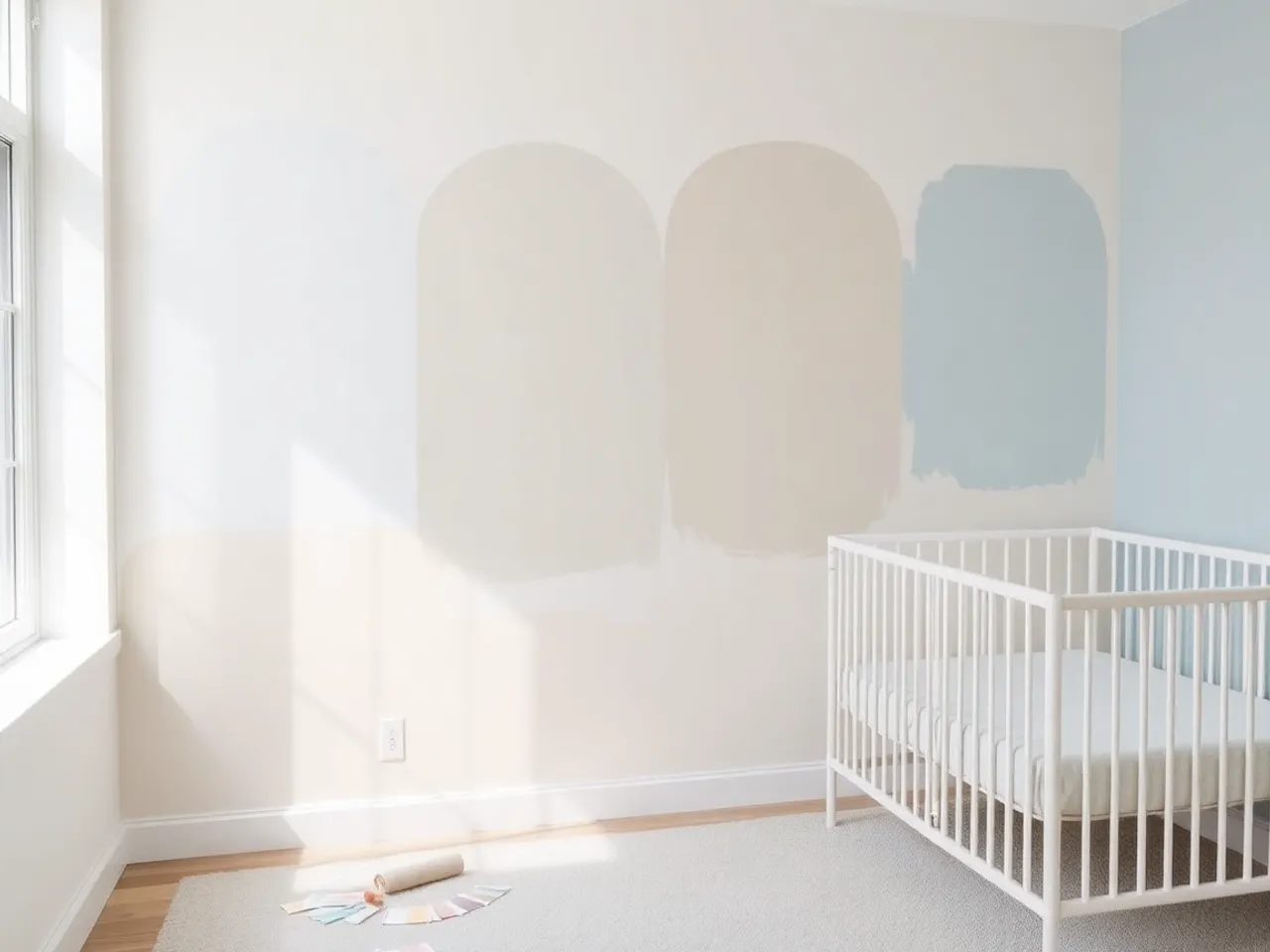
The test that takes one evening
- Buy sample pots of no more than three colors. Four is where people stall.
- Paint two coats onto A3 sheets of primed card, not directly onto the wall. Card can be moved, wall patches cannot.
- Leave them to dry fully. Wet paint is a different color.
- Tape one to the wall opposite the window and one to the wall beside it. Look at both.
- Check at 9am, at 4pm, and at night under the bulb you will actually use.
- Hold the winner against the floor and the trim before you buy the gallon.
Questions people actually ask
What paint finish should I use in a nursery? +
Is nursery paint safe? How long before the baby can sleep in there? +
Should the ceiling be white? +
What color makes a small nursery look bigger? +
Keep going
Sage green nursery
The most-asked-about color, in detail.
Blue nursery
Four blues, and the window that decides between them.
Grey nursery
Warm up a cold one without repainting.
Gender neutral nursery
Six neutral palettes that are not beige on beige.
Baby girl nursery ideas
Five palettes and how each one ages.
Baby boy nursery ideas
Why grey stopped working and what replaced it.
All nursery ideas
Layout and budget, which come before color.